
سعید غنی
سعید غنی
Saeed Ghani warns against ‘Hatred politics’, says Sindh will not accept new province
Karachi
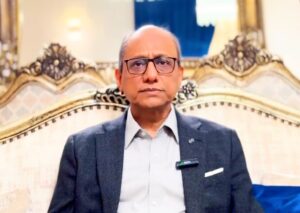
Sindh Minister for Labour, Human Resources and Social Protection Saeed Ghani has said the people of Sindh, including all political parties, are united in their opposition to the creation of a new province in Sindh, stressing that only the people of the province had the constitutional right to decide whether it should be divided.
Reacting to a press conference by Muttahida Qaumi Movement-Pakistan (MQM-P) Chairman Dr Khalid Maqbool Siddiqui regarding the division of Sindh and the creation of new provinces, Mr Ghani said MQM leaders Khalid Maqbool Siddiqui, Farooq Sattar and Mustafa Kamal could not even be elected councillors from their respective areas, yet were talking about creating provinces.
In a video message issued on Sunday, he said the same MQM leaders who had, only days earlier, been “firing bullets at one another” were now holding a press conference and once again singing the old refrain about bringing forward and implementing a proposal for a new province in Sindh.
“This is nothing new that these people from the MQM have said,” Mr Ghani said. He pointed out that it was not only the Pakistan Peoples Party but various political parties elected to the Sindh Assembly at different times that had passed several resolutions declaring that there was no need for a new province in Sindh.
He said MQM representatives had also been present in some of those assembly sessions and had not opposed the resolutions, except for a resolution brought a few months ago which some MQM members opposed.
Mr Ghani expressed surprise at what he described as an “absurd” argument advanced by Dr Siddiqui concerning the constitutional procedure for creating a new province. Under the Constitution, he said, the provincial assembly concerned must first approve a resolution by a two-thirds majority, after which the National Assembly and Senate have to amend the Constitution with a two-thirds majority before a new province can come into existence.
Dr Siddiqui, he said, had described this as a conflict of interest, arguing that people living in a province should not themselves decide whether a new province should be created there.
“By that logic, if a new province is to be created in Punjab, the people of Sindh should decide it; if a new province is to be created in Khyber Pakhtunkhwa, the people of Balochistan should decide it; and if a new province is to be created in Balochistan, the people of Sindh should make the decision,” Mr Ghani said.
He termed the argument “strange and nonsensical”, saying it was common sense that the people of the province where such a decision was to be made should have the right to decide it through their elected representatives. “There can be no better way than this,” he said.
Mr Ghani said he believed the MQM was reluctant to follow the constitutional procedure because its leaders were “100 per cent certain” that their proposal would not succeed.
He said that not only the PPP but virtually all political parties currently operating in Sindh, with perhaps the exception of the MQM, would oppose the creation of any new province in the province.
“If 100 per cent — or even 80 or 90 per cent — of the people or political parties in a province agree that there is no need for a new province, you cannot impose a decision by force on those people or achieve it through any other means,” he said.
Mr Ghani said Punjab’s case was different because the Punjab Assembly had already passed resolutions for the creation of not one but two new provinces.
He recalled that the then Pakistan Muslim League-Nawaz government, headed by Chief Minister Shahbaz Sharif, had publicly announced its intention to create new provinces in Punjab. He said speeches by both Shahbaz Sharif and Nawaz Sharif existed in which they had openly advocated the creation of two new provinces.
He added that all political parties represented in the Punjab Assembly at the time had agreed to a resolution calling for the creation of the Bahawalpur and South Punjab provinces.
“If the people of Punjab and the Punjab Assembly have no objection to the creation of new provinces in Punjab, neither I nor anyone else has the right to go there and decide whether new provinces should or should not be created,” he said.
Similarly, he said, if a new province was to be created in Khyber Pakhtunkhwa, neither he nor anyone else had the authority to make that decision. “That right belongs entirely to the people of Khyber Pakhtunkhwa,” he said.
The same principle, he added, applied to Balochistan.
Mr Ghani warned that any attempt to adopt a different procedure and forcibly impose a decision on the people of Sindh would be particularly dangerous given the prevailing circumstances in the country.
“Pakistan needs political stability and national unity at this time,” he said. “If you seek to create hatred and distance among people living in a province and, God forbid, conspire to trigger ethnic riots, it could cause irreparable damage to the country.”
Mr Ghani said the MQM’s misfortune was that it had historically practised the politics of hatred and was now once again attempting to push Karachi towards such politics.
He expressed surprise at MQM leaders’ criticism of the condition of Karachi’s roads and sewerage system.
“I do not disagree; these problems may indeed exist,” he said. “But on that basis, the MQM cannot claim that the city has been destroyed and has become, supposedly, the world’s third most unliveable city.”
He sharply criticised those making such claims, recalling that the MQM had in the past called strikes lasting up to a week in Karachi, allegedly caused the deaths of around 100 innocent people on a daily basis, burnt people alive, extorted money from citizens, destroyed businesses and set industries on fire, resulting in workers being burnt alive.
“These are the very people who are now saying that because a road has not been properly constructed, because a manhole does not have a cover, or because some people do not have access to clean drinking water, the PPP has destroyed the city,” Mr Ghani said.
He appealed to the MQM not to create hatred in Sindh out of its opposition to the PPP.
“You can disagree with the PPP government and criticise us as much as you want. You can hold us accountable for whatever you want. But do not sacrifice the peace of Sindh and the love and harmony among its people at the altar of your political hatred,” he said.
Describing the MQM’s present political position as that of a “dead horse”, Mr Ghani said Khalid Maqbool Siddiqui, Mustafa Kamal and Farooq Sattar, if they contested an election today, could not even be elected councillors from their own respective areas.
“People whose political standing has been reduced to this level are now sitting together and deciding whether new provinces should be created in Sindh,” he said.
Mr Ghani reiterated that the decision belonged exclusively to the people of Sindh and that nobody else had the right to determine whether another province should be carved out of Sindh.
“If anyone is interested, let them follow the procedure laid down in the Constitution and try it,” he said. “If the people of Sindh decide that new provinces should be created in Sindh, then by all means. But if the people of Sindh stand united and speak with one voice, saying that they do not need a new province or any division of the province under any circumstances, then we cannot give people from another province or another area the authority to decide whether further provinces should be created here.”